Tuesday, March 18, 2014

Post Exam Reflections

Reflecting after you take an exam is an important step in the learning process. Many students forget about exams the moment they get their grade back, but it’s a good idea to talk about both exams and exam preparation after your students take a test so they can improve for their next one! Here is an example Post Exam Reflection from a Math 112 professor. It is a great idea of something you should try with your students!


Post Exam Reflection (Math 112)

Answer the following questions and return your response to me. Please be honest, especially for question 3 – I’ll give full credit to any complete response, and it will count the same as one of your written quizzes. If you take this exercise seriously, the real benefit to you will be in the form of better scores on future exams.
  1. How did your score on this exam compare with the score you expected? How do you explain the difference, if any?
  2. How do you feel about your score? Are you surprised, pleased, relieved, disappointed or what?
  3. How many hours did you study for this exam? Was this enough time to get the score you wanted, or should you have spent more time preparing?
  4. How did you spend your time preparing for the exam? How effective were those activities?
  5. Choose a problem on your exam on which you made a significant mistake. Which problem is it? What did you do incorrectly? Why is that wrong?
  6. Now do the problem correctly. Check your work, read the text, consult with fellow students, visit lab hours and whatever else you need to do to make sure you’ve done it correctly.
  7. What can you do to make sure that you don’t make the same mistake on future homeworks, quizzes and exams? What changes in your study strategies will you make for the next exam?

To get the maximum benefit from this exercise, and to raise your scores as much as possible on the remaining exams, consider doing steps 5,6 and 7 for every problem for which you didn’t get full credit.

Friday, March 14, 2014

Academic Mentor Meeting Overview

To recap our meetings this week, I wanted to post a summary of the campus resources we talked about as well as post the links to the articles and podcasts we used. If you have any other resources you like to use, please let us know! We hope you continue to grow as guides by sharing resource information with your students. Additionally, the stories we posted provide some background research for many of the initiatives of the academic mentoring program. They are very interesting, so listen to/read them if you have a chance!

----------------------------------------------------------------------------------------------------------------------------------

The Writing Center - helps undergraduate and graduate students in all disciplines become more effective, more confident writers. The Writing Center offers: -instructors who work one-on-one with students -undergraduate peer tutors who work one-on-one with students in undergraduate writing-intensive courses -an online writing center -short-term, non-credit workshops about academic writing

Physics Learning Center - Offers small group study sessions, access to study materials, and extra exam review sessions. Study groups meet twice each week and are led by trained peer tutors and staff. They provide extra practice problems and opportunities to discuss physics concepts. Works with Physics 103, 104, 207, and 208.

Chemistry Learning Center - Supportive learning environment where students meet in small groups with staff to work out effective strategies for mastering chemistry.

Greater University Tutoring Services - Matches tutors with a group of up to 6 students taking the same section of the same course. Groups meet in a designated classroom on campus for two hours each week. Also offers: Drop-In, Conversational English, Study Skills

The Mathematics Tutorial Program – Not to be confused with Math Lab, the Math Tutorial Program offers free tutoring in a cooperative learning environment for students enrolled in Math 95-234. Tutorial sessions meet twice a week. Each session is made up of 8-10 students in the same class. Attendance at tutorial sessions is mandatory to participate in the program.

University Health Services (UHS) - the student health center at UW–Madison. They provide a wide range of medical, mental health counseling, prevention, and wellness services to help support individual students so they can be personally and academically healthy and successful.

The Division of Information Technology (DoIT) – provides computer technology services to the University of Wisconsin-Madison. In addition to helping fix computers, DoIt offers educational opportunities and help navigating the university's internet services, like myUW, email and learn@uw.

The Division of University Housing (Slichter Hall) – provides resources about all aspects of living in residence halls, such as tutoring services, food accounts and programs and activities to get involved

Division of Student Life - This division houses many important departments, including the dean of student's office that provides the above services, as well as the Center for the First-Year Experience, International Student Services

UHS' Let’s Talk – a program that provides drop-in consultations at locations around campus for UW-Madison students. It’s free, no appointment is necessary, and students are seen on a first-come, first-served basis

Morgridge Center for Public Service - UW-Madison's center for public service connects campus with community through service. There are various opportunities for volunteering and programs on campus through which to get involved

The Study Abroad International Academic Programs – helps you choose, apply and plan for various study abroad opportunities

L&S Career Services – helps you discover new majors and career paths, find new opportunities to experience these potential careers and helps prepare you for the application process

The Multicultural Student Center (MSC) – unit of the Division of Student Life and is located on the second floor of The Old Red Gym. The primary mission of the MSC is: To collaboratively strengthen and sustain an inclusive campus where all students, particularly students of color and other historically undeserved students, are engaged and can realize an authentic Wisconsin Experience

BuckyNet – a program that connects students and employers. Through BuckyNet, you can find internships and full-time employment opportunities, sign-up for on-campus interviews, learn about employers, and access additional resources such as CareerInsider and GoingGlobal. Upcoming events are posted on BuckyNet, keeping you up to date on all career fairs, information sessions, interviews and career workshops

Pre-Health Advising - Talk with an advisor about applying to health professions. There are drop in advising hours as well as resources on summer programs and research opportunities on their website.

Pre-Law Advising - You can schedule appointments or drop-in to discuss a career in law or good coursework to take for this career path. There are resources for taking the LSAT and also info about the Law School fair

The Exploration Center – designed to assist students in exploring majors and careers. They help undergraduate students focus on their interests, values, strengths, and personality to give them the tools they need to make decisions about their careers and their futures.

CAE advisor – All students have advisors in the CAE that can help them decide about classes. If your student is unsure of what classes to take, or has a problem with a professor, direct them there!
----------------------------------------------------------------------------------------------------------------------------------
Links:
Story Editing NPR: http://www.npr.org/blogs/health/2014/01/01/258674011/editing-your-lifes-stories-can-create-happier-endings

Test Anxiety Sian Beilock: http://www.psychologytoday.com/blog/choke/201101/worried-about-performing-well-under-stress-write-it-out

Full article: http://www.sciencemag.org/content/331/6014/211.full.pdf

Wednesday, March 5, 2014

Studying Fallacies

As an academic mentor, part of your role is to give study tips to your students and help them develop good study skills. It’s important to not only encourage positive study habits but also warn students against some common bad habits that masquerade as ‘effective studying.’ We’ve compiled a list of common studying fallacies that should be avoided!
  • Cramming
  • Continuous studying without breaks
  • Rereading notes and textbook
  • Studying at the library but not getting much done because there’s too many distractions – friends, facebook, etc…
  • Group studying without independent learning – relying on other members of the group for answers
  • Watching tv while studying
  • Copying entire textbook into notes
  • Taking a practice exam with your notes open
  • ‘Blindly’ taking notes
  • ANYTHING PASSIVE

We all do some of these once in a while, but make sure your student knows that these aren’t effective ways to learn material. Are there any more studying fallacies you can think of? How do you encourage good study habits in your students?

For additional study tip suggestions, check out this link:

It is a short questionnaire that gets at learning styles in a different way and provides a list of potential new strategies to try to augment what you are already doing.

Tuesday, February 25, 2014

Strategy to Try - KWL Chart!

KWL Chart

This is a great, versatile strategy to start off any session. It helps get at the topics your student wants to cover. It can be used for any subject matter, with any number of students. As many of you begin to work with paired students, instead of simply asking what your students have questions on, think about using the KWL chart to determine what both of your students want to work on!


How to set it up: 
It works best on a whiteboard or larger board, but it can also work on a piece of paper. Title three columns: What I Know (K), What I Want to Know (W), and What I Learned (L). Have your student fill out the first two columns with what they know from lecture, and what they were confused on/want to go over more in depth in tutoring. At the end of your session, have your student fill out the Learned column as the closing. 

If you work with paired students you can ask one student who puts something in the Know column to explain something to the other student. It can be a great way to assign topics for an 'Assign the Expert' activity.

Wednesday, February 12, 2014

Strategy to try - Memory!

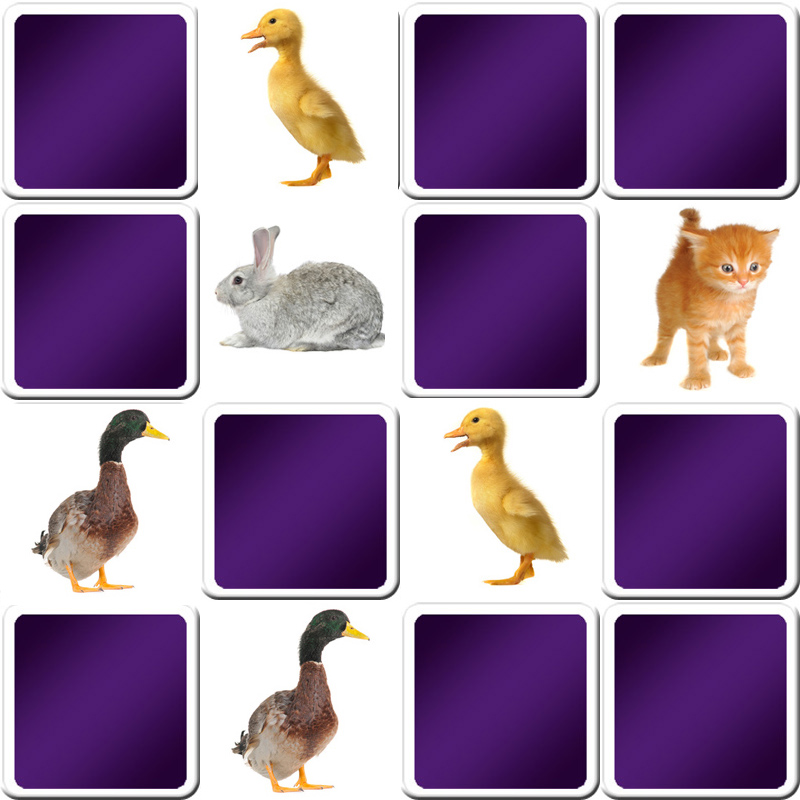
Memory

You may have not played Memory since you were much younger, but it works great as a study tool! It is a fun and useful game if you have a lot of vocabulary or definitions to go over, or have to remember the names of chemicals, compounds, amino acids, etc. It would also work great for memorizing new vocab in a foreign language!

Recommended for: Chemistry, Biology, Psychology, Foreign Language

How to set it up: Prepare between 12 and 24 note cards. Half of the note cards should have vocab terms, and the other half should have definitions/images. Shuffle the cards and place them face down in a grid. Each student (or you and your student if you work in one-on-one) take turns flipping over two cards at a time, trying to find a match.

Thursday, February 6, 2014

Creating Independent Students

Instructional Scaffolding is a learning theory that describes the process of student development with the help of an instructor, tutor or academic mentor. Scaffolding refers to the support given during the learning process that helps students achieve levels of understanding that they might not normally be able to on their own.

Generally, scaffolding takes place in a few steps. First, the instructor or academic mentor does an activity or exercise. Then the group does it. Then the individual does it. You will see this progression in some of our examples below.

Below are some strategies that can be used in your sessions. We have included some examples of how you can these strategies can be applied to progressively “scaffold” your students and grow their academic independence.

Examples:
Subject: Math; Strategy: Hints - 
February: 2-3 steps of an equation
March: 1st step of an equation
April: No steps 
May: Students generating their own steps

Subject: Biology; Strategy: Handouts - 
Step 1: Incomplete outline for students to fill out
Step 2: Incomplete outline with diagrams (no words/explanations provided). Students explain what is happening
Step 3: Students assigned topic to create outline/study guide on particular topic

Subject: Anatamy/Physiology - 
Step 1: Cascade of stress (cortisol release)
Step 2: Real world application - stress induces weight gain and depresses immune function
Step 3: Apply to own life - how to counteract and prevent stress

References
Alibali, M (2006). Does visual scaffolding facilitate students’ mathematics learning? Evidence from early algebra. Retrieved September 12, 2008 from http://ies.ed.gov/funding/grantsearch/details.asp?ID=54

Monday, January 27, 2014

Challenge Grid

At the returning academic mentors' orientation, we discussed some common challenges that we face as academic mentors. Here are some of the creative solutions you all came up with!

If you find yourself running into any of these challenges this semester, be sure to refer to this grid for some ways to deal with the issues. Good luck!